Last updated: September 18, 2026
1. Agreement to these terms
These Terms of Use govern your access to and use of the HomeSignal website at homesignal.com, including its articles, layout, contact form, and related informational materials. HomeSignal is an informational publishing brand operated by SGA Rai Marketing Inc. By viewing, using, or submitting information through this website, you agree to these terms.
If you do not agree, you should not use the website or submit a contact request. These terms should be read together with the Privacy Policy and the Imprint. If you use the website on behalf of another person or a business, you represent that you are authorized to accept these terms for that person or business.
2. Informational purpose
HomeSignal provides homeowner-focused informational content about roofing-related topics such as warning signs, aging materials, weather exposure, and general next-step considerations. The content is intended to help readers think about common issues. It is general in nature and is written for a broad audience rather than for a specific property.
Content on this website should not be treated as engineering advice, structural advice, architectural advice, building-code interpretation, insurance advice, legal advice, financial advice, a home inspection, a roofing diagnosis, or a determination of cause, cost, urgency, or required repairs. Roof conditions vary by materials, age, ventilation, flashing, drainage, prior workmanship, local climate, hidden damage, and other factors that cannot be assessed from an article alone.
3. HomeSignal is not a roofing contractor
HomeSignal does not itself perform roofing repairs, inspections, replacements, installations, emergency tarping, leak remediation, or other roofing work. SGA Rai Marketing Inc. operates this website as a marketing and publishing business. Neither the brand nor the operator holds itself out as your roofing contractor by reason of your visit to this website or your submission of a contact form.
The website may help users initiate contact regarding roofing needs. That function is limited to publishing information and, where a form is used, collecting a request so that an independent professional or service partner may attempt to follow up. No contractor-customer relationship is created with HomeSignal or the operator merely because you read an article or asked to be contacted.
4. Independent professionals and third parties
Roofing services, if any, are provided by independent roofing professionals, contractors, or service providers. Those parties are not employees, joint venturers, or agents of HomeSignal simply because they may receive an inquiry generated through this website. They are responsible for their own licensing, insurance, workmanship, safety practices, pricing, scheduling, warranties, and customer communications.
HomeSignal does not guarantee the availability, pricing, qualifications, licensing, insurance, timing, suitability, quality of work, or outcome of any professional or service provider. Mention of roofing work, typical concerns, or possible next steps is not a referral endorsement of any particular company, product, method, or price.
If you choose to speak with, hire, or otherwise deal with a third party, that arrangement is solely between you and that third party. You should review their contract, scope of work, credentials, insurance, and warranty terms before proceeding.
5. Contact requests and no guaranteed result
Submitting a request through the website is an expression of interest in being contacted about roofing needs. It does not guarantee contact, an appointment, inspection, quote, repair, replacement, financing, insurance involvement, or service availability. A professional or partner may be unable to reach you, may not serve your location, may decline the inquiry, or may offer information that you decide not to pursue.
No submission creates an obligation on HomeSignal, the operator, or any third party to inspect your property, diagnose a leak, attend at a particular time, match a competitor’s price, or complete any work. Any later agreement for roofing services must be made directly with the professional or company that would perform the work.
6. Accuracy of information you provide
If you submit a form, you agree to provide information that is accurate, current, and complete to the best of your knowledge. You also agree that you are the owner or occupant of the relevant property, or that you are authorized to request contact on behalf of that person. You should not submit another person’s contact details unless you have permission to do so.
False, misleading, automated, or abusive submissions may be ignored, blocked, or reported. We may refuse or discontinue processing of a request where we reasonably suspect misuse, fraud, spam, or a safety or legal concern.
7. User responsibility
You are responsible for evaluating any roofing professional or service provider you choose to engage. That responsibility includes asking appropriate questions and reviewing proposed work, pricing, materials, timelines, credentials, insurance, permits, and contract terms before authorizing work.
You remain responsible for decisions about your property, including whether to obtain additional inspections, whether to contact your insurer, whether to seek a second opinion, and whether to proceed with repairs or replacement. HomeSignal does not supervise third-party work and is not responsible for the acts, omissions, delays, statements, or workmanship of independent professionals.
8. Roof safety
Users should not climb onto a roof, walk a steep or wet surface, enter an unsafe attic, or otherwise place themselves in danger because of something read on this website. Articles may discuss visual signs or homeowner observations, but they are not an invitation to perform dangerous self-inspection.
Roofs can be slippery, fragile, or structurally compromised. Professional assessment should be considered where closer inspection is required, especially after storms, leaks, sagging, repeated interior staining, or any condition that could involve electrical, moisture, or structural hazards. If there is an immediate safety emergency, contact the appropriate emergency services or a qualified professional rather than relying on website content.
9. Website content and changes
Reasonable efforts may be made to keep content useful, readable, and reasonably current. Information about roofing materials, building practices, insurance processes, costs, climate effects, and local requirements can change. No guarantee is made that every article is complete, error-free, up to date, or applicable to every home, municipality, or weather event.
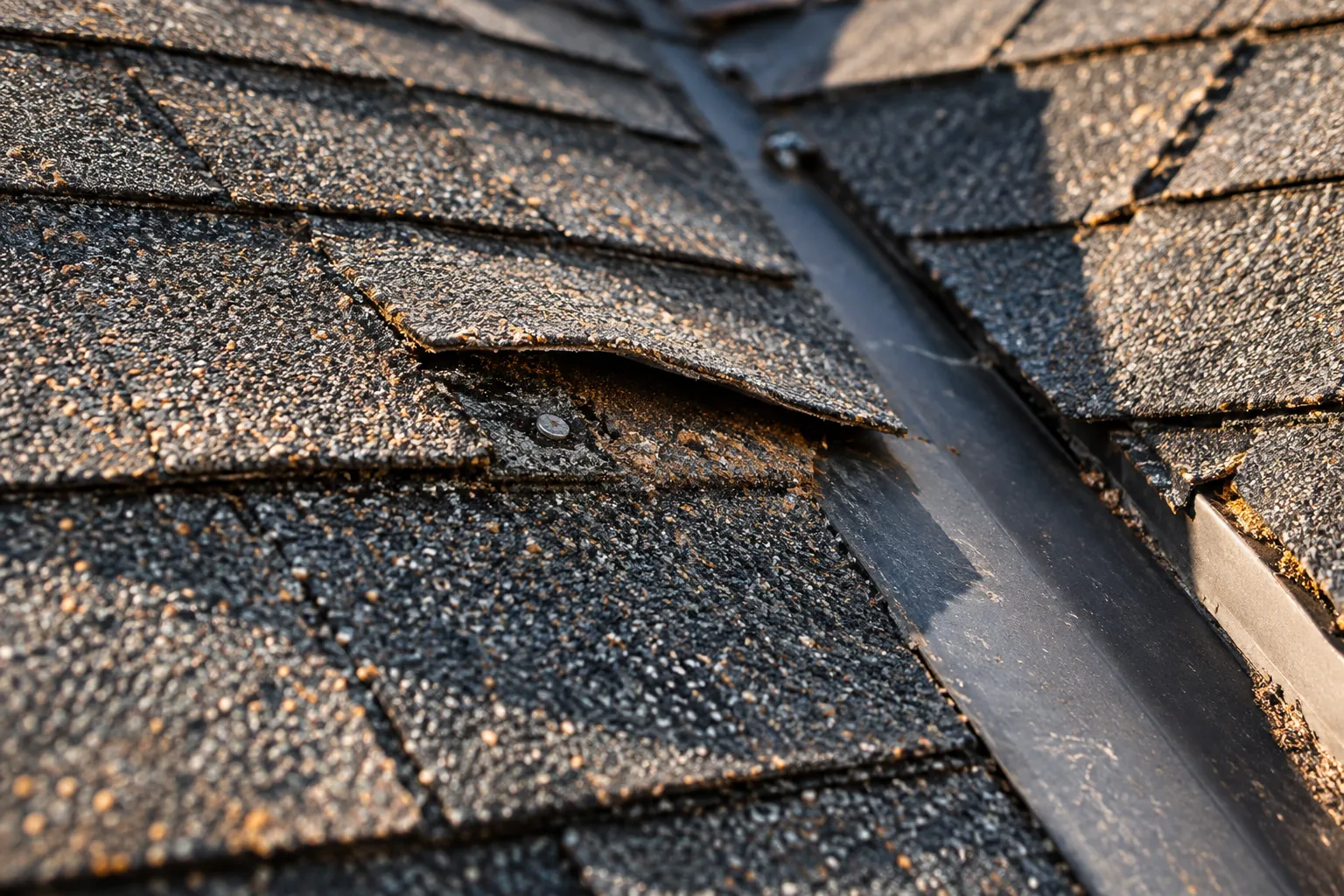
Content may be edited, replaced, or removed at any time. Photographs, examples, and descriptions are illustrative. They are not a representation of your roof, a promise of a particular result, or a statement that every homeowner will have the same experience.
10. Intellectual property
The website’s content, branding, wordmarks, layout, graphics, article text, and other original materials are owned by the operator or used under license and may be protected by copyright, trademark, and other laws. You may view and temporarily store pages for your personal, non-commercial use.
You should not copy, scrape, republish, sell, frame, modify, or redistribute website content without prior written permission, except where a limited exception is permitted by law, such as fair dealing. HomeSignal and related names and presentation are used to identify this publishing brand and should not be used in a way that suggests you operate the website or are endorsed by it.
11. Acceptable use
You agree to use the website only for lawful purposes and in a way that does not impair its operation or other users’ ability to use it. Without limitation, you agree not to:
- attempt to probe, scan, reverse engineer, or interfere with the website, its servers, or related systems;
- submit malware, automated spam, fake leads, or content intended to disrupt or mislead;
- harvest contact details or other information from the website by unauthorized means;
- use the website to send unlawful, defamatory, or infringing communications; or
- misrepresent your identity, property, or authority to request contact.
We may suspend access, ignore submissions, or take other reasonable steps where we believe these terms have been violated.
12. Website availability and technical limits
Uninterrupted, error-free, or fully secure website availability is not guaranteed. The site may be unavailable because of maintenance, hosting issues, network failures, campaign changes, or events beyond the operator’s reasonable control. Forms, tracking tools, and pages may be modified or taken down without notice.
You are responsible for obtaining the device, browser, and internet access needed to use the website. We are not responsible for charges, delays, or failures associated with your device, carrier, or internet service.
13. Third-party links and tools
The website may include links, redirects, advertising tags, call tracking, analytics, or other tools operated by third parties. Those tools and destinations are not under the operator’s exclusive control. A link or tracking component does not mean HomeSignal endorses the third party or is responsible for its content, availability, or practices.
14. Disclaimers
The website and all content are provided on an “as is” and “as available” basis. To the fullest extent permitted by applicable law, HomeSignal and SGA Rai Marketing Inc. disclaim all warranties, representations, and conditions, whether express, implied, or statutory, including implied warranties of merchantability, fitness for a particular purpose, title, quiet enjoyment, and non-infringement.
Without limiting the foregoing, no warranty is made that the website will identify a roofing problem, prevent property damage, produce a quote, result in contact, or lead to satisfactory work by any third party.
15. Limitation of liability
To the fullest extent permitted by applicable law, HomeSignal, SGA Rai Marketing Inc., and their directors, officers, employees, and representatives shall not be liable for any indirect, incidental, special, consequential, punitive, or exemplary damages, or for any loss of profits, data, goodwill, business, or anticipated savings, arising out of or related to your use of the website, inability to use the website, reliance on website content, or any contact with a third-party professional.
To the fullest extent permitted by applicable law, the total liability of HomeSignal and the operator for any claim arising out of or relating to the website or these terms shall not exceed one hundred Canadian dollars (CAD $100). Some jurisdictions do not allow certain limitations. In those jurisdictions, the limitation applies to the maximum extent permitted.
Nothing in these terms is intended to exclude or limit liability that cannot be excluded or limited under applicable law, including liability for fraud or for death or personal injury caused by negligence where such exclusion is prohibited.
16. Indemnity
You agree to indemnify and hold harmless HomeSignal, SGA Rai Marketing Inc., and their directors, officers, employees, and representatives from and against claims, losses, damages, liabilities, costs, and expenses, including reasonable legal fees, arising out of or related to your use of the website, your submissions, your dealings with any third-party professional, or your violation of these terms or applicable law.
17. Governing law
These terms are governed by the laws of the Province of Ontario and the federal laws of Canada applicable in Ontario, without regard to conflict-of-law principles. You agree that the courts of Ontario shall have exclusive jurisdiction over disputes arising out of or relating to these terms or the website, subject to any non-waivable rights you may have under applicable law.
18. Changes to these terms
These terms may be updated from time to time. The version displayed on this website is the current version, and the “Last updated” date will be revised when a material change is published. Continued use of the website after an update constitutes acceptance of the revised terms. If you do not agree to a change, you should stop using the website.
19. General
If any provision of these terms is held unenforceable, the remaining provisions will continue in effect. A failure to enforce a provision is not a waiver of that provision. These terms, together with the Privacy Policy and Imprint, are the entire agreement between you and the operator regarding the website and supersede prior understandings on the same subject. You may not assign your rights under these terms without consent. The operator may assign these terms in connection with a corporate reorganization or transfer of the website.
20. Contact
For questions regarding these terms, contact:
HomeSignal
c/o SGA Rai Marketing Inc.
741 Durham Road 13
Leaskdale, ON L0C 1C0
Canada
Email: info@homesignal.com